Apple's new smart home strategy is bigger than HomeView
On October 13, Apple announced four connected-home products: HomeView, a new Apple TV 4K, HomePod mini 2, and the Apple Home Collection. The real story isn't any one gadget — it's Apple trying to make your home its next computing platform, with a smarter Siri at the center.
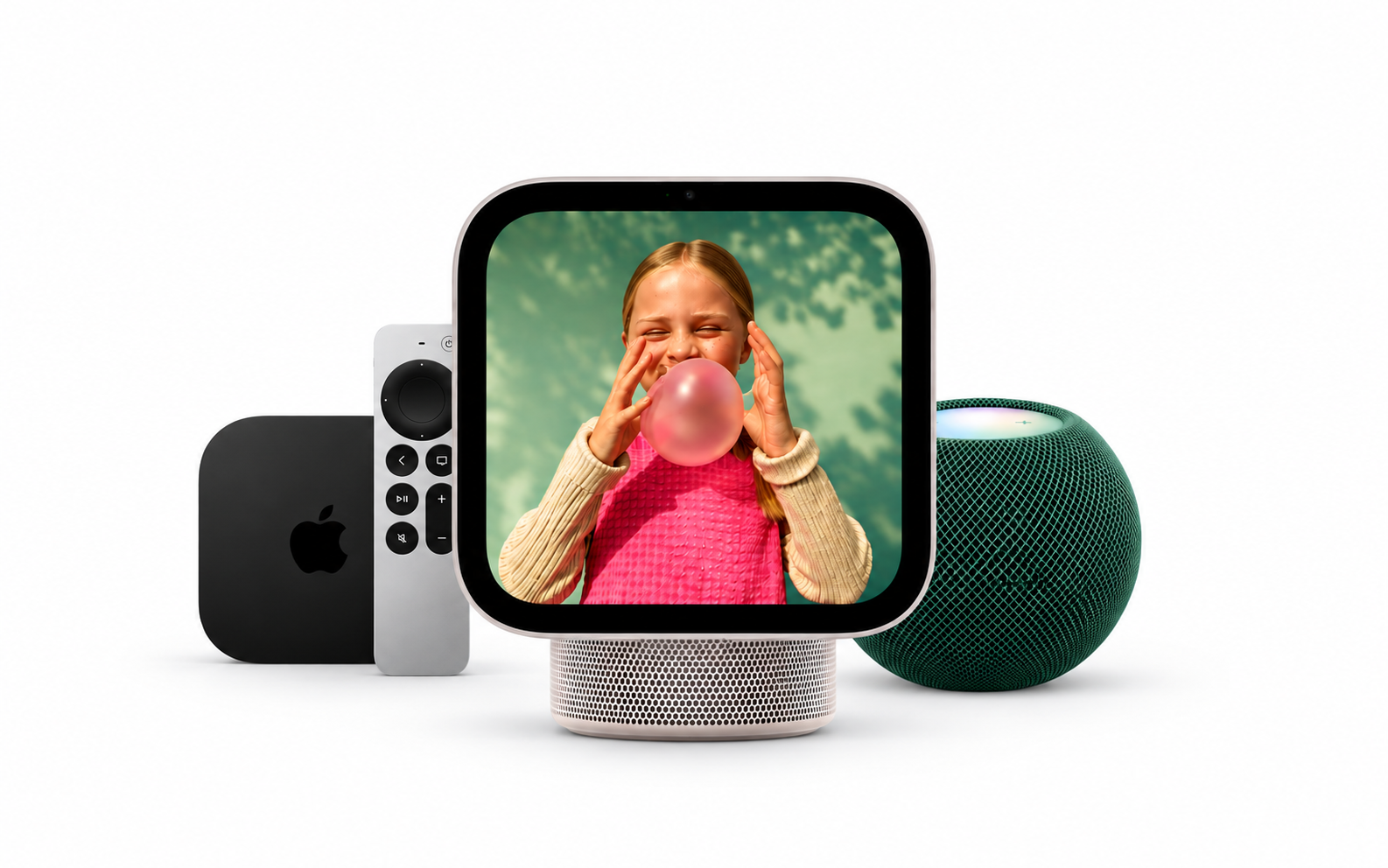
Apple announced four new smart home products on October 13: HomeView, the new Apple TV 4K, HomePod mini 2, and the Apple Home Collection.
At first, this looks like a regular product launch. A screen, a speaker, a streaming box, and some cameras and locks.
But there's a bigger idea behind it.
Apple wants your home to work more like the rest of its ecosystem. Your iPhone, Apple TV, speakers, cameras, and smart locks should work together without making you jump between apps.
Siri is supposed to tie everything together.
If it works well, that could make Apple's smart home setup easier to use. But there's a catch. Some of the features Apple is promoting depend on software updates, and the new products will need to prove themselves in everyday use.
Here's what Apple announced, what each product offers, and who should consider buying it.
The short version
Apple now has four new parts of its smart home plan.
- HomeView: A screen for controlling your home, checking cameras, making calls, and viewing personal information.
- Apple TV 4K: A streaming device that also works as a smart home hub.
- HomePod mini 2: A small speaker that can control smart home accessories and work with Apple TV for surround sound.
- Apple Home Collection: Cameras, a doorbell, a smart lock, and thermostats made with LG Electronics and Schneider Electric.
All four fit into Apple's Home ecosystem, but they aren't all available at the same time. HomeView and Apple TV 4K include Siri AI at launch in supported regions. HomePod mini 2 will receive its new Siri features through a future software update.
That difference matters if you're buying a product mainly for its AI features.
1. Apple HomeView: a screen made for your home
HomeView is Apple's answer to a simple question: what if your home had its own screen, rather than relying on an iPad or iPhone?
It has a 7-inch Liquid Retina display and a speaker built into its base. You can use it for music, podcasts, FaceTime, Messages, calendars, reminders, and smart home controls.
There's a tabletop version and a wall-mounted version. The wall-mounted model could be useful near an entrance, where you might want to check a doorbell camera or control the lights as you leave.
What does it offer?
Here are the main features Apple has confirmed:
- A 7-inch display with automatic brightness adjustment, from 500 nits down to 0.3 nits.
- An A18 chip with Secure Exclaves that isolate camera and microphone processing.
- Face recognition for up to six household members.
- Support for up to nine live camera feeds on screen.
- FaceTime with Center Stage.
- An intercom feature that works with other compatible Apple devices.
- A custom speaker system with Spatial Audio.
HomeView can also show personal information such as Messages and Calendar. Apple says it only displays that content after it recognizes the user and confirms that their paired iPhone or iPad meets its connection and security requirements.
That's an important part of the design. A shared screen should not show one person's messages to everyone who walks past it.
Apple says HomeView costs $299 in the US and ₹39,900 in India for either model. Pre-orders opened on October 13, with availability scheduled for November 13.
Source: Apple's HomeView announcement.
Who should consider buying it?
HomeView makes the most sense for people who already use several Apple products.
If your family has iPhones, HomePods, and Apple TV, having one shared screen for the home could be useful. The wall-mounted version is also worth considering if you want a fixed control panel instead of keeping an iPad on a stand.
But the price is worth thinking about.
If you already own an iPad that handles your smart home controls, music, and video calls, HomeView needs to offer enough extra value to justify ₹39,900.
It may also be less useful in a home where most people use Android phones.
And if you're buying it mainly for Siri AI, remember that the experience depends on the features available in your region and how well the software works in practice.
2. Apple TV 4K: more than a streaming box
Apple has also announced a new generation of Apple TV 4K.
It still handles streaming, but Apple wants it to do more. The company is positioning it as an entertainment device and a central part of its smart home setup.
What's new?
The fourth-generation Apple TV 4K includes:
- An A19 chip, with performance improvements over the previous generation.
- An AV1 video decoder for supported streaming content.
- Siri AI with a full-screen conversational search experience.
- Built-in far-field microphones for hands-free voice control.
- Smart home controls and camera notifications on your TV.
- Support for a four-speaker surround sound setup using compatible HomePod speakers.
One example is asking Siri about a film while you're watching it. Apple wants you to be able to ask a question such as where a scene was filmed and get an answer on screen.
The built-in microphones also mean you won't always need to pick up the remote to talk to Siri.
The audio setup is another interesting change. With four compatible HomePod speakers, Apple TV 4K can create a surround sound system and adjust the audio based on where the speakers are placed.
That could be useful for people who already own HomePods or plan to buy them.
But it also means the complete setup will cost much more than a basic streaming stick.
The new Apple TV 4K costs ₹39,900 in India and $299 in the US. Pre-orders opened on October 13, and availability begins November 13.
Source: Apple's Apple TV 4K announcement.
Who should consider buying it?
If you have an older Apple TV and want better smart home controls, hands-free Siri, and a surround sound setup, the new model is worth watching.
It may also suit people who want to see their doorbell camera on the television without switching away from what they're watching.
But if you mainly use Netflix, Prime Video, or YouTube, you may not need all these features.
A cheaper streaming device can handle basic viewing. And if you're not planning to buy HomePod speakers, one of the main benefits of the new Apple TV may not matter much to you.
I'd wait for independent tests before deciding whether the new processor and Siri features justify the price.
3. HomePod mini 2: a small speaker with a bigger role
The HomePod mini 2 looks familiar, but Apple has updated its hardware and added new features.
It uses the S10 chip and supports 360-degree audio. It also comes in five colors: pink, green, blue, white, and midnight.
Apple has added a feature called Sound Glow. The top of the speaker lights up and changes with the music.
The speaker also supports sound recognition for smoke and carbon monoxide alarms, with alerts sent to compatible Apple devices.
But the more important change is how it fits into the rest of the home.
What can it do?
HomePod mini 2 can play music, respond to voice commands, control compatible smart home accessories, and run automations.
It can also recognize voices from different household members. When paired with the new Apple TV 4K, it can take part in Apple's four-speaker surround sound setup.
The speaker costs $149 in the US and ₹18,900 in India. It comes in five colors and is scheduled to go on sale on October 30.
There's one important detail: Apple says the new Siri AI features will arrive through a future software update.
So, you're buying the speaker now, but some of the features Apple is highlighting won't be available immediately.
Source: Apple's HomePod mini 2 announcement.
Who should consider buying it?
HomePod mini 2 is the most affordable way to add another Apple speaker to your home.
It could make sense if you want music in several rooms, voice controls for smart lights, or a speaker that works with the new Apple TV setup.
But I wouldn't rush to buy it only for Siri AI. If the new assistant is your main reason for upgrading, waiting for the software update and early reviews would be sensible.
The hardware may be available first. The complete experience comes later.
4. Apple Home Collection: the biggest change to Apple's smart home plans
This is the part of the announcement I find most interesting.
Apple has worked with LG Electronics and Schneider Electric to introduce a set of smart home accessories. The range includes cameras, a video doorbell, a smart lock, thermostats, and temperature sensors.
Instead of making you install a different app for every device, Apple wants these products to work through its Home app.
The idea is simple: set up a compatible accessory with your iPhone, then manage it alongside the rest of your smart home.
What's included?
Here are the official US starting prices:
| Product | US starting price |
|---|---|
| LG Video Doorbell Wired | $249.95 |
| LG Smart Deadbolt Lock | $349.95 |
| LG Indoor Cam Plug-In | $199.95 |
| LG Outdoor Cam Plug-In | $299.95 |
| LG Floodlight Cam | $399.95 |
| LG Smart Thermostat | $199.95 |
| Schneider Home Smart Thermostat | $199.95 |
The products have different features. The doorbell uses two cameras, the smart lock supports Apple Home Key, and the indoor camera can move into a privacy position when someone is home.
The thermostats are designed to work with Apple's Home ecosystem, while the cameras can use Apple's secure video features.
Apple says compatible accessories can be set up with an iPhone and managed through the Home app without a separate manufacturer app or account.
However, camera video history in iCloud requires an eligible iCloud+ subscription. So, while you may not need a separate subscription from the camera maker, cloud storage isn't necessarily free.
Source: Apple's Home Collection announcement.
When will the products be available?
Apple's initial launch plans cover the US, Canada, and UK, with some products arriving in early 2027.
India's pricing and launch availability for the Home Collection have not been confirmed in the cited announcement.
That's important for Indian buyers. A product announced in the US isn't automatically available here, and the price may change when it reaches another market.
Who should consider buying it?
The collection could be useful for people who want a simpler smart home setup and are comfortable using Apple's Home app.
If you already have a working Ring or Nest setup, however, there's no need to replace everything just because Apple has announced its own range.
Before switching, check compatibility, installation costs, and whether the new products work with the devices you already own.
And if you're in India, wait for local availability and pricing before making plans around these accessories.
5. What Apple's announcements tell us
Taken together, these products point to a bigger change in how Apple wants people to use its ecosystem.
Siri is becoming a central part of the home
HomeView, Apple TV 4K, and HomePod mini 2 all put Siri at the center of their experience.
Apple wants you to be able to ask for a film, check who's at the door, change the temperature, or control the lights without thinking about which device handles the request.
That's a useful idea. But it depends on Siri understanding what you want and responding reliably.
The real test will come when people use these devices every day, with background noise, several people talking, and a mix of compatible accessories.
Apple wants more control over the full experience
Apple has sold smart speakers and supported home accessories for years. This launch brings a display, a streaming box, speakers, cameras, locks, and thermostats into a more connected plan.
The company doesn't have to manufacture every accessory itself. By working with LG and Schneider Electric, it can expand the range while keeping the Home app at the center.
That also gives customers fewer apps to manage, at least when all their chosen devices support the system.
Privacy is part of the pitch
Smart home devices can see who's at your door, hear conversations, and control access to your house.
Apple says HomeView uses Secure Exclaves to separate camera and microphone processing from the rest of the system. It also says personal data in the Home app is protected through end-to-end encryption.
Those are important claims, but they still deserve scrutiny. Buyers should look at the actual settings, permissions, storage requirements, and supported devices rather than relying on a general promise of privacy.
The competition is already there
Apple isn't entering an empty market.
Amazon has Echo Show devices and Ring security products. Google has Nest displays, cameras, and home services.
HomeView starts at $299 in the US, which puts it in the more expensive part of the smart display market.
Apple's challenge is to show that its integration, privacy features, and connection to the iPhone are worth the extra money.
If you already use Apple products throughout your home, that argument may be convincing. If you use Android, Google Home, or Alexa, switching could be harder.
Apple vs Amazon and Google
| Area | Apple's approach | What Apple needs to prove |
|---|---|---|
| Smart display | HomeView | That its shared screen is worth the price |
| Voice assistant | Siri AI | That it works reliably in everyday use |
| Home security | Partner-made cameras and locks | That setup and migration are easy |
| Entertainment | Apple TV 4K and HomePod | That the complete setup justifies its cost |
| Setup | Apple's Home app | That different devices work together without hassle |
The difference isn't just the hardware. Apple wants the home to feel like one connected system.
That works best when everyone in the house already uses Apple devices. For other households, the benefits may be less obvious.
What should Indian buyers know?
Here's the current picture for India:
- HomeView: ₹39,900 for both tabletop and wall-mounted models. Availability begins November 13.
- Apple TV 4K: ₹39,900, with availability beginning November 13.
- HomePod mini 2: ₹18,900, with availability beginning October 30.
- Apple Home Collection: India pricing and launch availability have not been confirmed in the cited announcement.
- Siri AI: Apple lists English support in India for HomeView and the new Apple TV 4K. HomePod mini 2 will receive Siri AI through a future software update.
The practical questions are worth asking before you buy.
Does HomeView offer enough over an iPad to justify ₹39,900? Will you use the new Apple TV features? Is HomePod mini 2 worth buying now if you're mainly interested in the upcoming Siri update?
And if you want the Home Collection, when will the products arrive in India, and will they suit your home's wiring and installation needs?
Those questions matter more than the launch announcement itself.
The bottom line
Apple's new products make its smart home plans easier to understand. HomeView gives the home a dedicated screen. Apple TV 4K connects entertainment with home controls. HomePod mini 2 adds voice control and audio. The Home Collection expands the range of accessories that work with Apple's Home app.
But the products aren't all at the same stage. Some features depend on future software updates, and the Home Collection's initial availability is limited to specific markets.
If you're already deep into Apple's ecosystem, this is worth watching. If you're buying mainly for the new Siri, wait for reviews and check which features are available on the product you're considering.
The bigger story isn't four new gadgets. It's Apple's attempt to make your home work as one connected system. Whether that system is worth the price will depend on how well it works outside the announcement.